
Only one leave—and you’ve got yourself an unforgettable three-day vacation!
Independence Day is not only an occasion to celebrate India’s freedom but also a wonderful opportunity to step away from routine and explore the country’s extraordinary landscapes.
In 2026, Independence Day falls on Saturday, 15 August. Take leave on Friday, 14 August, and you can enjoy a convenient three-day break from Friday to Sunday.
That is enough time for a refreshing road trip, a romantic hill-station escape, a heritage holiday or a peaceful family vacation.
August is also one of the most visually rewarding months to travel across India. The monsoon turns hills deep green, revives seasonal waterfalls, fills lakes and rivers, and brings a refreshing calm to destinations that feel dry or crowded during other parts of the year.
Imagine driving through mist-covered coffee estates in Coorg, watching clouds float over Munnar’s tea gardens, sailing across the backwaters of Alleppey or admiring the rain-washed palaces of Udaipur. A thoughtfully planned three-day journey can offer all the relaxation and excitement of a much longer holiday.
In this detailed guide, you will discover 15 of the best Independence Day trip ideas in India, along with suggested itineraries, major attractions, travel routes, estimated budgets, local food recommendations and essential monsoon travel tips.
Whether you are planning a weekend getaway with friends, a romantic trip with your partner, a solo adventure or a family holiday, there is something here for every kind of traveller.
Why Independence Day Is the Perfect Long Weekend to Travel
Independence Day falls in the heart of India’s monsoon season. While rain can occasionally interrupt travel plans, it also transforms many destinations into lush, vibrant retreats.
Mountains become greener, waterfalls grow stronger, lakes look fuller and forests appear dramatically refreshed. Even cities known for heat, such as Udaipur and Orchha, often feel more pleasant during cloudy August days.
Here are some of the biggest reasons to plan an Independence Day getaway:
- Taking one day of leave can create a three-day vacation.
- Waterfalls and monsoon streams are usually at their scenic best.
- Hill stations offer cooler and more comfortable temperatures.
- Road trips become visually spectacular.
- Several hotels offer attractive monsoon-season packages.
- The season is ideal for nature and landscape photography.
- Some destinations receive fewer tourists than during summer holidays.
- Cafés, homestays and forest lodges feel especially cosy in the rain.
- Couples can enjoy romantic weather without planning an expensive international trip.
- Families can take a short break without disrupting work or school schedules significantly.
The key is to select a destination that is reasonably close to your city and avoid an itinerary that requires excessive travelling.
Things to Consider Before Planning an August Trip
Monsoon travel requires more flexibility than travelling during the dry season. Heavy rain, waterlogging, poor visibility, landslides and temporary road closures can affect certain destinations.
Before confirming your plans, evaluate the following factors.
Check the Travel Time
For a three-day trip, the destination should ideally be reachable within six to eight hours by road, train or a short flight followed by a manageable transfer.
Spending most of the holiday in transit can leave you tired rather than refreshed.
Monitor the Weather
Check the forecast a few days before departure and continue monitoring local advisories. Conditions in mountain regions can change quickly during August.
Avoid travelling to areas experiencing warnings for extreme rainfall, floods or landslides.
Choose Refundable Bookings
Book hotels, flights and activities that provide free cancellation or date modification wherever possible. A slightly higher refundable rate can save money if the weather suddenly becomes unsafe.
Keep Your Itinerary Flexible
Do not schedule every hour of the trip. Maintain alternative indoor activities such as cafés, museums, palaces, temples, craft centres or spa experiences.
Avoid Risky Adventure Activities
Trekking, rafting, swimming and waterfall visits should only be attempted when officially permitted and supervised by trained local operators.
Never enter overflowing rivers or cross barricaded areas for photographs.
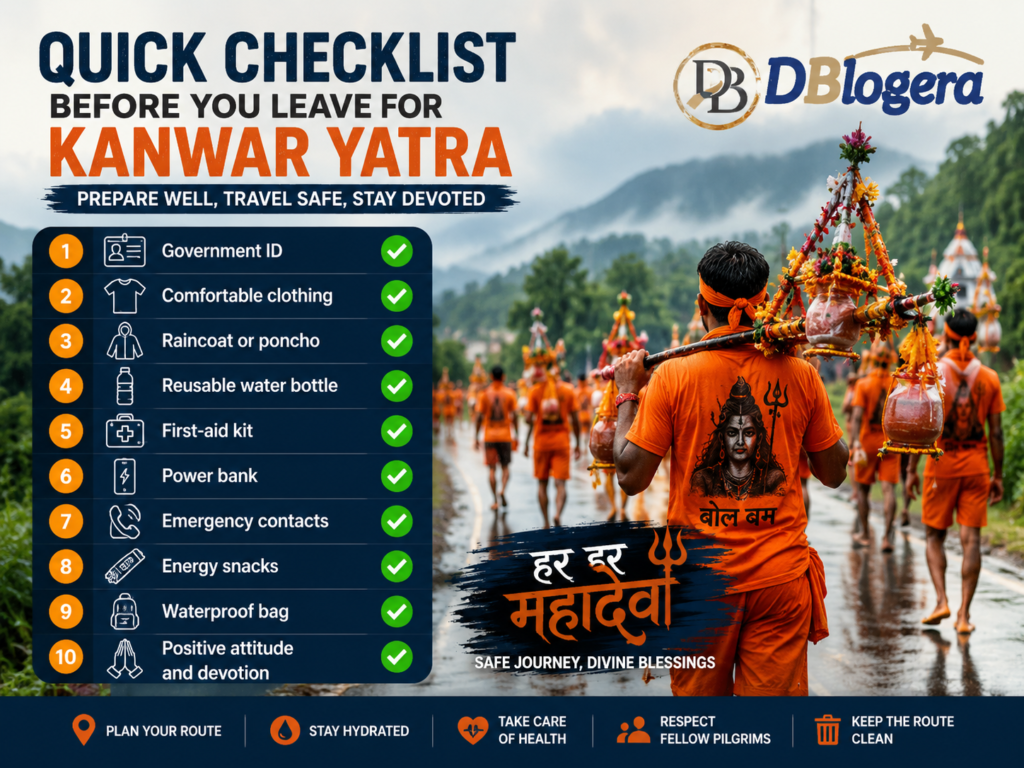
Monsoon Travel Checklist
Carry the following essentials for a more comfortable Independence Day trip:
- Lightweight raincoat or poncho
- Compact umbrella
- Waterproof backpack or rain cover
- Quick-drying clothes
- An extra pair of socks
- Shoes with strong grip
- Identity proof
- Personal medicines
- First-aid kit
- Insect repellent
- Power bank
- Waterproof phone pouch
- Reusable water bottle
- Dry snacks
- Offline maps
- Cash for remote locations
- Plastic-free waterproof pouches for documents
15 Best Independence Day Trip Ideas in India
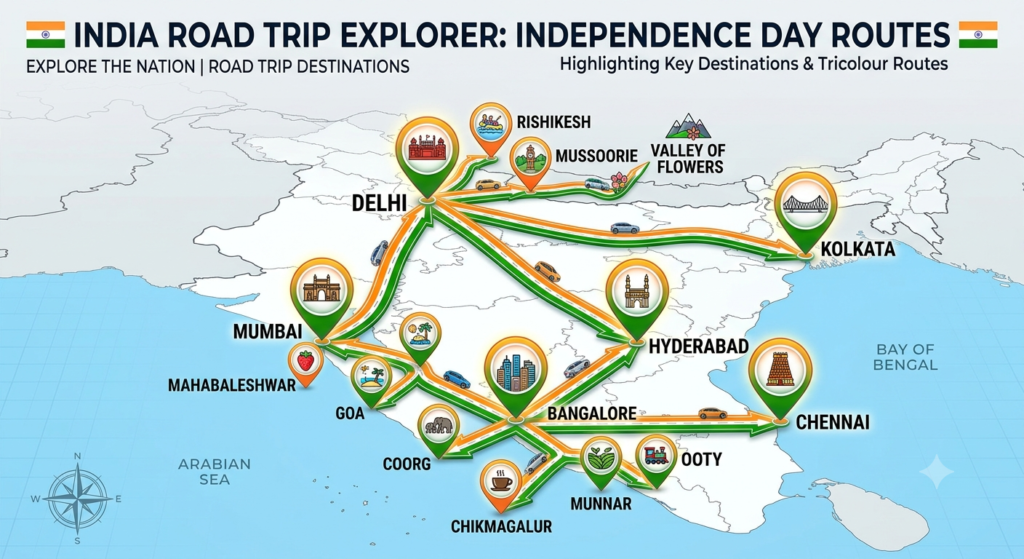
India Long Weekend Destination Map
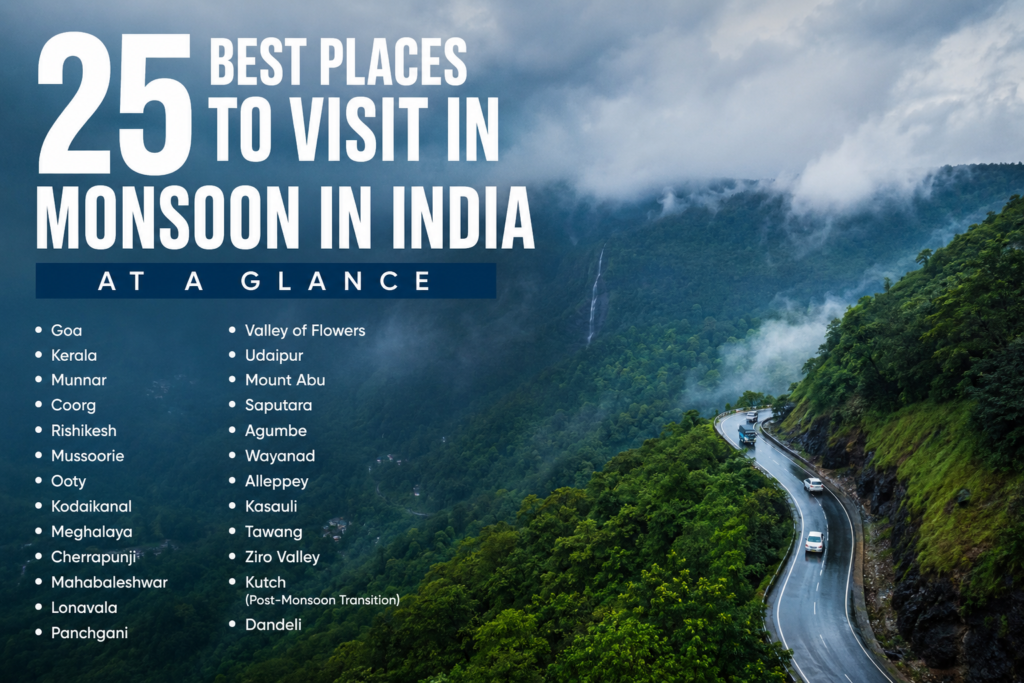
The following destinations offer a mix of nature, culture, heritage, food, relaxation and adventure. Each can be planned as a three-day getaway, depending on your starting city and transport connections.
1. Coorg, Karnataka – Coffee Estates Wrapped in Mist
Coorg, officially known as Kodagu, is one of the most popular Independence Day holiday destinations in South India. During August, its coffee plantations, forest roads and rolling hills are covered in mist.
The smell of wet earth and coffee blossoms, the sound of rain falling on tiled roofs and the sight of clouds moving through the valleys give Coorg a deeply peaceful atmosphere.
Madikeri serves as the main base for most travellers. From there, you can visit waterfalls, viewpoints, monasteries, plantations and riverside attractions.
Top Attractions in Coorg
- Abbey Falls
- Raja’s Seat
- Madikeri Fort
- Omkareshwara Temple
- Dubare Elephant Camp
- Mandalpatti Viewpoint
- Talacauvery
- Namdroling Monastery
- Coffee plantations
Suggested Three-Day Itinerary
Day 1: Arrive in Madikeri, check in and visit Raja’s Seat, Madikeri Fort and Omkareshwara Temple.
Day 2: Explore Abbey Falls and a coffee plantation. Visit Mandalpatti only when road and weather conditions are safe.
Day 3: Visit Dubare or Namdroling Monastery before beginning the return journey.
What to Eat
Try kadambuttu, noolputtu, akki roti, bamboo shoot curry, and traditional Coorg-style curries.
Ideal For
Couples, families, nature lovers, photographers and road-trip enthusiasts.
Approximate Budget
A budget trip may cost around ₹6,000–₹10,000 per person, while comfortable stays and private transportation can increase the cost.
Travel Tip
Roads can become slippery during heavy rain. Hire an experienced local driver for plantation roads and viewpoints.
2. Munnar, Kerala – Endless Tea Gardens and Floating Clouds
Munnar is among the most romantic Independence Day trip ideas for couples. Its tea-covered slopes, misty valleys, winding roads and cool August weather create an almost cinematic landscape.
The monsoon makes Munnar greener and quieter, although heavy rainfall may occasionally affect sightseeing.
A slow-paced itinerary works best here. Rather than rushing between attractions, spend time enjoying tea gardens, scenic drives and peaceful viewpoints.
Places to Visit in Munnar
- Eravikulam National Park
- Tata Tea Museum
- Mattupetty Dam
- Echo Point
- Kundala Lake
- Top Station
- Attukad Waterfalls
- Pothamedu Viewpoint
- Blossom Park
Suggested Three-Day Itinerary
Day 1: Arrive, explore the local market, visit the Tea Museum and enjoy sunset views from Pothamedu.
Day 2: Cover Mattupetty Dam, Echo Point, Kundala Lake and nearby tea estates.
Day 3: Visit Eravikulam National Park if open and accessible, followed by a relaxed café or plantation experience.
What to Eat
Try appam with stew, Kerala parotta, puttu, kadala curry, banana chips and locally produced tea.
Ideal For
Couples, honeymooners, families and travellers looking for a peaceful nature retreat.
Approximate Budget
Expect approximately ₹7,000–₹14,000 per person, depending on transport and accommodation.
Travel Tip
Some viewpoints may be covered by fog. Treat the misty drive and plantation atmosphere as part of the experience rather than chasing a packed sightseeing schedule.
3. Udaipur, Rajasthan – Romance Meets Royal Heritage
Udaipur is generally associated with winter travel, but the monsoon gives the City of Lakes a distinctive charm. Cloudy skies, fuller lakes and the Aravalli hills create a refreshing contrast to Rajasthan’s desert image.
It is one of the best long weekend destinations for couples, families and heritage enthusiasts.
Udaipur is especially suitable for travellers who want a blend of indoor and outdoor attractions. If rain interrupts your lake plans, you can still explore palaces, museums, cafés and cultural venues.
Top Attractions in Udaipur
- City Palace
- Lake Pichola
- Jag Mandir
- Fateh Sagar Lake
- Sajjangarh Monsoon Palace
- Bagore Ki Haveli
- Saheliyon Ki Bari
- Jagdish Temple
- Shilpgram
Suggested Three-Day Itinerary
Day 1: Visit City Palace, Jagdish Temple and Bagore Ki Haveli. Walk around the old city in the evening.
Day 2: Explore Fateh Sagar Lake, Saheliyon Ki Bari and Sajjangarh Palace, weather permitting.
Day 3: Enjoy a boat ride if operations are open, shop for handicrafts and visit a rooftop café overlooking the lake.
What to Eat
Do not miss dal baati churma, gatte ki sabzi, ker sangri, pyaaz kachori and traditional Rajasthani thalis.
Ideal For
Couples, families, architecture lovers, food enthusiasts and photographers.
Approximate Budget
A three-day trip may cost approximately ₹7,000–₹15,000 per person.
Travel Tip
Book lake-facing accommodation early because rooms with the best views can become expensive during a holiday weekend.
4. Lonavala and Khandala, Maharashtra – A Classic Monsoon Escape
Few destinations represent monsoon travel in India as perfectly as Lonavala and Khandala. Located close to Mumbai and Pune, these twin hill stations are surrounded by green valleys, seasonal waterfalls, forts and misty viewpoints.
Their easy accessibility makes them extremely popular during the Independence Day long weekend.
However, this popularity also brings traffic congestion. Start early, avoid unsafe roadside parking and never stand near overflowing waterfalls or steep valley edges.
Places to Visit
- Tiger Point
- Lion Point
- Bhushi Dam
- Karla Caves
- Bhaja Caves
- Lohagad Fort
- Rajmachi Fort
- Duke’s Nose
- Pawna Lake
Suggested Three-Day Itinerary
Day 1: Reach Lonavala, visit Karla and Bhaja Caves and explore the market.
Day 2: Visit a safe viewpoint, Pawna Lake or Lohagad Fort only if trekking conditions are favourable.
Day 3: Enjoy a relaxed breakfast, shop for chikki and return before peak evening traffic.
What to Eat
Lonavala is famous for chikki, fudge, corn pakoras, vada pav, misal pav and hot tea.
Ideal For
Friends, couples, families, bikers and weekend road trippers from Mumbai and Pune.
Approximate Budget
Budget travellers may spend ₹4,000–₹8,000 per person. Premium villas can significantly increase the overall cost.
Travel Tip
Do not enter restricted areas near Bhushi Dam. Water levels can rise suddenly during heavy rain.
5. Mahabaleshwar, Maharashtra – Forest Roads and Dramatic Viewpoints
Mahabaleshwar becomes wonderfully atmospheric during August. The hill station is surrounded by dense forests, valleys, viewpoints and seasonal waterfalls.
While fresh strawberries are more closely associated with the winter harvest, visitors can still enjoy strawberry-based products, jams, cream desserts and local farm shops.
Top Attractions
- Arthur’s Seat
- Venna Lake
- Elephant’s Head Point
- Kate’s Point
- Lodwick Point
- Lingmala Waterfall
- Mapro Garden
- Old Mahabaleshwar
Suggested Three-Day Itinerary
Day 1: Arrive, visit Venna Lake and explore the main market.
Day 2: Cover major viewpoints depending on visibility and rainfall. Visit Mapro Garden in the evening.
Day 3: Explore Old Mahabaleshwar and return via Panchgani if time permits.
What to Eat
Try strawberry cream, corn patties, mulberry products, sandwiches, local berries and Maharashtrian snacks.
Ideal For
Families, couples, senior travellers and nature lovers.
Approximate Budget
Plan approximately ₹6,000–₹12,000 per person.
Travel Tip
Fog can reduce visibility significantly. Avoid driving after dark if you are unfamiliar with the route.
6. Shillong, Meghalaya – Waterfalls, Lakes and Cloudy Hills
Shillong is one of the most beautiful places to visit in August in India. The Meghalaya capital combines colonial charm, local culture, music, cafés, waterfalls and dramatic landscapes.
August can bring substantial rainfall, but that is also what makes the region’s waterfalls and forests so spectacular.
Shillong works best for travellers flying into Guwahati and arranging a reliable road transfer.
Places to Explore
- Umiam Lake
- Elephant Falls
- Ward’s Lake
- Shillong Peak
- Police Bazaar
- Laitlum Canyons
- Don Bosco Museum
- Cathedral of Mary Help of Christians
Suggested Three-Day Itinerary
Day 1: Travel from Guwahati to Shillong with a stop at Umiam Lake.
Day 2: Visit Elephant Falls, Shillong Peak, Don Bosco Museum and Police Bazaar.
Day 3: Explore Laitlum Canyons if the weather is safe, followed by cafés and local shopping.
What to Eat
Try Khasi dishes such as jadoh, dohneiihong, tungrymbai and local smoked-meat preparations. Vegetarian cafés are also widely available.
Ideal For
Nature lovers, food explorers, photographers and couples.
Approximate Budget
Including the Guwahati–Shillong transfer, the trip may cost ₹10,000–₹18,000 per person.
Travel Tip
Keep buffer time for road travel because rain and traffic can delay transfers.
7. Wayanad, Kerala – Forests, Waterfalls and Quiet Homestays
Wayanad offers a mix of wildlife, plantations, caves, dams and forested hills. It is one of the most rewarding weekend getaway options in India for travellers from Bengaluru, Mysuru, Kozhikode and nearby areas.
During August, Wayanad looks exceptionally green, but outdoor activities may be regulated depending on rain and forest conditions.
Top Places in Wayanad
- Edakkal Caves
- Banasura Sagar Dam
- Pookode Lake
- Soochipara Falls
- Kuruva Island
- Chembra Peak
- Thirunelli Temple
- Tea and spice plantations
Suggested Three-Day Itinerary
Day 1: Arrive, check into a plantation stay and visit Pookode Lake or a nearby viewpoint.
Day 2: Explore Edakkal Caves and Banasura Sagar Dam.
Day 3: Visit a plantation, local market or permitted waterfall area before returning.
What to Eat
Try Malabar parotta, appam, stew, pathiri, puttu, local rice dishes and Kerala-style curries.
Ideal For
Families, couples, wildlife enthusiasts and slow travellers.
Approximate Budget
A three-day trip may cost ₹6,000–₹12,000 per person.
Travel Tip
Access to waterfalls, trekking routes and forest zones may be restricted during heavy rainfall. Always check locally before leaving your accommodation.
8. Valley of Flowers, Uttarakhand – A Legendary Himalayan Trek
The Valley of Flowers is unlike most destinations on this list. It is a UNESCO-recognised Himalayan landscape famous for alpine flowers, mountain scenery and trekking trails.
The valley is generally at its floral best during the monsoon months. However, it is not a relaxed three-day holiday from most major cities.
Travellers should account for road transfers, trekking time, weather delays and physical demands. A complete journey often requires five to seven days or more, depending on the starting point.
Therefore, choose the Valley of Flowers only when you already have additional leave or are beginning the trip from a nearby Himalayan region.
Main Experiences
- Trek from Govindghat and Ghangaria
- Alpine flower landscapes
- Mountain streams
- Hemkund Sahib extension
- Himalayan photography
- Peaceful village stays
Who Should Choose It
Experienced walkers, nature photographers, trekkers and travellers with good fitness levels.
Approximate Budget
A longer budget expedition can cost ₹12,000–₹25,000 per person, excluding flights.
Important Safety Note
This region can experience landslides, trail closures and transport disruption during heavy rain. Do not attempt the journey without checking official local conditions.
9. Mount Abu, Rajasthan – Rajasthan’s Refreshing Hill Station
Mount Abu offers a pleasant blend of lakes, forests, temples, viewpoints and local markets. The monsoon refreshes the surrounding Aravalli hills and makes the landscape noticeably greener.
It is an attractive Independence Day destination for travellers from Ahmedabad, Udaipur, Jaipur and parts of Gujarat and Rajasthan.
Must-Visit Places
- Nakki Lake
- Dilwara Temples
- Guru Shikhar
- Sunset Point
- Toad Rock
- Peace Park
- Achalgarh Fort
Suggested Three-Day Itinerary
Day 1: Check in, explore Nakki Lake and walk through the market.
Day 2: Visit Dilwara Temples, Guru Shikhar and Achalgarh.
Day 3: Enjoy a relaxed morning, visit Peace Park or nearby viewpoints and begin the return journey.
What to Eat
Try Rajasthani thalis, dal baati churma, rabri, kachori and local street snacks.
Ideal For
Families, couples, senior citizens and temple visitors.
Approximate Budget
Plan approximately ₹5,000–₹10,000 per person.
Travel Tip
Holiday traffic near Nakki Lake can be intense. Choose accommodation slightly away from the busiest market if you prefer peace.
10. Chikmagalur, Karnataka – Coffee, Mountains and Adventure
Chikmagalur is a superb alternative to Coorg for travellers seeking coffee plantations, waterfalls and mountain scenery.
The district is home to Mullayanagiri, one of Karnataka’s highest peaks, along with scenic drives through Baba Budangiri and numerous plantation estates.
In August, the entire region appears fresh and intensely green.
Major Attractions
- Mullayanagiri
- Baba Budangiri
- Hebbe Falls
- Jhari Falls
- Hirekolale Lake
- Coffee Museum
- Plantation estates
Suggested Three-Day Itinerary
Day 1: Arrive, visit Hirekolale Lake and explore a coffee estate.
Day 2: Travel towards Mullayanagiri and Baba Budangiri if visibility and road conditions permit.
Day 3: Visit the Coffee Museum, relax at your homestay and return.
What to Eat
Enjoy filter coffee, neer dosa, akki roti, kadubu and traditional Malnad meals.
Ideal For
Couples, photographers, bikers and coffee lovers.
Approximate Budget
Expect to spend around ₹6,000–₹12,000 per person.
Travel Tip
Book a plantation homestay rather than staying only in the main town. The plantation atmosphere is one of Chikmagalur’s biggest attractions.
11. Alleppey, Kerala – Backwater Calm and Houseboat Experiences
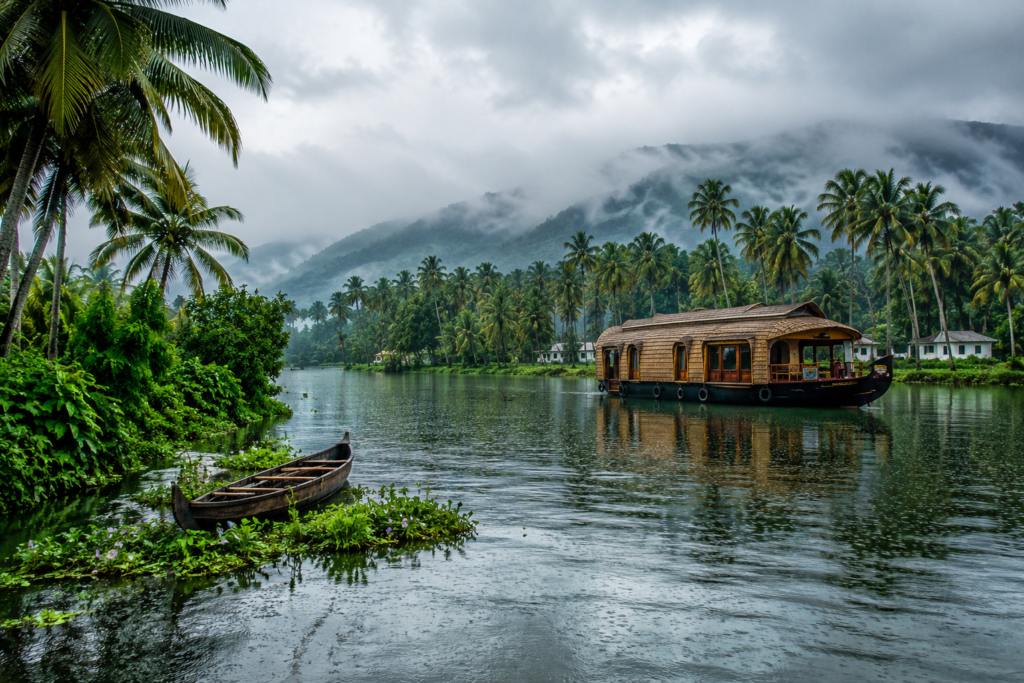
Alleppey, also known as Alappuzha, offers one of India’s most distinctive travel experiences: cruising through a network of backwaters lined with coconut palms, villages and paddy fields.
It is a beautiful choice for couples and families looking for a slower Independence Day trip.
Houseboat prices vary widely, so compare packages carefully and confirm what is included.
Top Experiences
- Day cruise or overnight houseboat
- Village canoe tour
- Alappuzha Beach
- Backwater homestay
- Local seafood
- Sunset photography
- Marari Beach excursion
Suggested Three-Day Itinerary
Day 1: Arrive, explore Alappuzha Beach and check into a backwater resort.
Day 2: Enjoy a houseboat or smaller canoe experience.
Day 3: Visit Marari Beach or a nearby village before returning.
What to Eat
Try karimeen dishes, appam, stew, Kerala fish curry, tapioca preparations and banana chips.
Ideal For
Couples, honeymooners, families and slow travellers.
Approximate Budget
A budget trip may cost ₹7,000–₹12,000 per person. Private overnight houseboats can push the cost higher.
Travel Tip
Ask about the boat’s route, air-conditioning timings, meal plan, hygiene standards and safety equipment before booking.
12. Orchha, Madhya Pradesh – Forts, Cenotaphs and Riverside Heritage
Orchha is a compact heritage town located along the Betwa River. Its palaces, temples, murals and cenotaphs create a setting that feels grand yet less crowded than many famous tourist cities.
The monsoon adds greenery to the riverbanks and dramatic clouds to the skyline, making it highly photogenic.
Places to Explore
- Orchha Fort Complex
- Jahangir Mahal
- Raja Mahal
- Ram Raja Temple
- Chaturbhuj Temple
- Cenotaphs
- Betwa River
- Lakshmi Narayan Temple
Suggested Three-Day Itinerary
Day 1: Reach Orchha, explore the fort complex and attend the evening aarti.
Day 2: Visit Chaturbhuj Temple, Lakshmi Narayan Temple and the cenotaphs.
Day 3: Enjoy a riverside walk, shop for handicrafts and return via Jhansi.
What to Eat
Try Bundelkhandi food, poha, jalebi, local thalis and seasonal snacks.
Ideal For
History lovers, families, photographers, architecture enthusiasts and solo travellers.
Approximate Budget
Orchha is relatively affordable, with a possible budget of ₹4,000–₹8,000 per person.
Travel Tip
Do not enter the Betwa River when the current is strong. Monsoon water levels can change quickly.
13. Saputara, Gujarat – A Peaceful Hill Retreat
Saputara is Gujarat’s best-known hill station and an excellent option for travellers seeking greenery without the intense crowds of more famous mountain destinations.
It offers a lake, gardens, viewpoints, a ropeway and access to nearby waterfalls.
Places to Visit
- Saputara Lake
- Sunrise Point
- Sunset Point
- Step Garden
- Lake Garden
- Artist Village
- Ropeway
- Gira Waterfalls
- Waghai Botanical Garden
Suggested Three-Day Itinerary
Day 1: Arrive, enjoy boating at Saputara Lake and explore the gardens.
Day 2: Visit viewpoints, the ropeway and Artist Village.
Day 3: Take an excursion towards Gira Falls or Waghai, subject to local conditions.
What to Eat
Try Gujarati thali, khaman, handvo, thepla, fafda and local tribal preparations where available.
Ideal For
Families, couples, senior citizens and travellers from Gujarat and Maharashtra.
Approximate Budget
A comfortable trip can cost ₹5,000–₹9,000 per person.
Travel Tip
Waterfall areas can become crowded and slippery. Wear suitable footwear and follow all barriers and local instructions.
14. Dandeli, Karnataka – Forests and Outdoor Adventure
Dandeli is known for forest stays, wildlife, river activities and outdoor adventure. It appeals to groups of friends and active travellers looking for something more energetic than a conventional hill-station holiday.
However, activities such as rafting and kayaking depend on water conditions, dam releases and local permissions. Never assume that a particular activity will be available simply because it is monsoon season.
Popular Experiences
- Kali River activities
- Kayaking
- Guided rafting when officially operational
- Jungle safari
- Birdwatching
- Ziplining
- Camping
- Syntheri Rocks
- Kavala Caves
Suggested Three-Day Itinerary
Day 1: Arrive at a forest resort, attend a nature walk and relax.
Day 2: Participate in permitted river activities with a registered operator.
Day 3: Choose a jungle safari, birdwatching session or visit to Syntheri Rocks before departure.
What to Eat
Resorts generally serve North Indian, South Indian and local Karnataka meals. Confirm inclusions before booking a package.
Ideal For
Friends, adventure seekers, birdwatchers and nature enthusiasts.
Approximate Budget
Packages typically range from ₹6,000–₹14,000 per person, depending on accommodation and activities.
Travel Tip
Book only with recognised operators who provide helmets, life jackets, safety briefings and trained guides.
15. Pachmarhi, Madhya Pradesh – The Queen of Satpura
Pachmarhi is a scenic hill station surrounded by forests, caves, waterfalls and sandstone formations.
The monsoon brings its vegetation to life and enhances waterfalls such as Bee Falls. It is a rewarding destination for families and travellers from Madhya Pradesh, Maharashtra and neighbouring states.
Top Attractions
- Bee Falls
- Jata Shankar Cave
- Pandava Caves
- Dhoopgarh
- Handi Khoh
- Apsara Vihar
- Priyadarshini Point
- Reechgarh
Suggested Three-Day Itinerary
Day 1: Arrive and explore Jata Shankar Cave and Pandava Caves.
Day 2: Take an authorised local sightseeing tour covering waterfalls and forest attractions.
Day 3: Visit Dhoopgarh or a nearby viewpoint, weather permitting, and return.
What to Eat
Try poha, jalebi, dal bafla, local snacks and simple North Indian meals available around the market.
Ideal For
Families, couples, photographers and nature lovers.
Approximate Budget
A three-day trip may cost ₹5,000–₹10,000 per person.
Travel Tip
Some forest areas require registered vehicles or local permits. Confirm the current process after arrival.
Best Independence Day Trips from Major Indian Cities
Choosing a destination close to your city makes a three-day holiday more enjoyable. Here are some convenient three-day trips from major cities.
Independence Day Trips from Delhi NCR
Rishikesh
Ideal for riverside cafés, yoga retreats, temples and short nature experiences. Adventure activities should only be booked when officially operational.
Mussoorie
A classic hill getaway offering Mall Road, viewpoints, cafés and easy access from Dehradun.
Lansdowne
A peaceful option for pine forests, colonial-era surroundings and quiet family time.
Jaipur
A reliable heritage getaway with forts, palaces, museums, food and numerous indoor attractions.
Jim Corbett Region
Suitable for resort stays and nature experiences, though safari zones and routes may have seasonal restrictions.
Additional Option from Meerut
Travellers from Meerut can also consider Haridwar, Rishikesh, Lansdowne, Nainital, Bhimtal, Jaipur and Agra, depending on weather and road conditions.
Independence Day Trips from Mumbai
- Lonavala and Khandala
- Mahabaleshwar
- Panchgani
- Alibaug
- Igatpuri
- Matheran
- Nashik
Independence Day Trips from Bengaluru
- Coorg
- Chikmagalur
- Wayanad
- Mysuru
- Sakleshpur
- Kabini
- Dandeli
Independence Day Trips from Chennai
- Yercaud
- Puducherry
- Ooty
- Kodaikanal
- Mahabalipuram
- Yelagiri
Independence Day Trips from Hyderabad
- Hampi
- Warangal
- Araku Valley
- Nagarjuna Sagar
- Bidar
- Srisailam
Independence Day Trips from Kolkata
- Darjeeling
- Kalimpong
- Digha
- Mandarmani
- Shantiniketan
- Tajpur
Mountain travel should be reconsidered if the region is experiencing heavy rain or landslide warnings.
How to Select the Right Destination
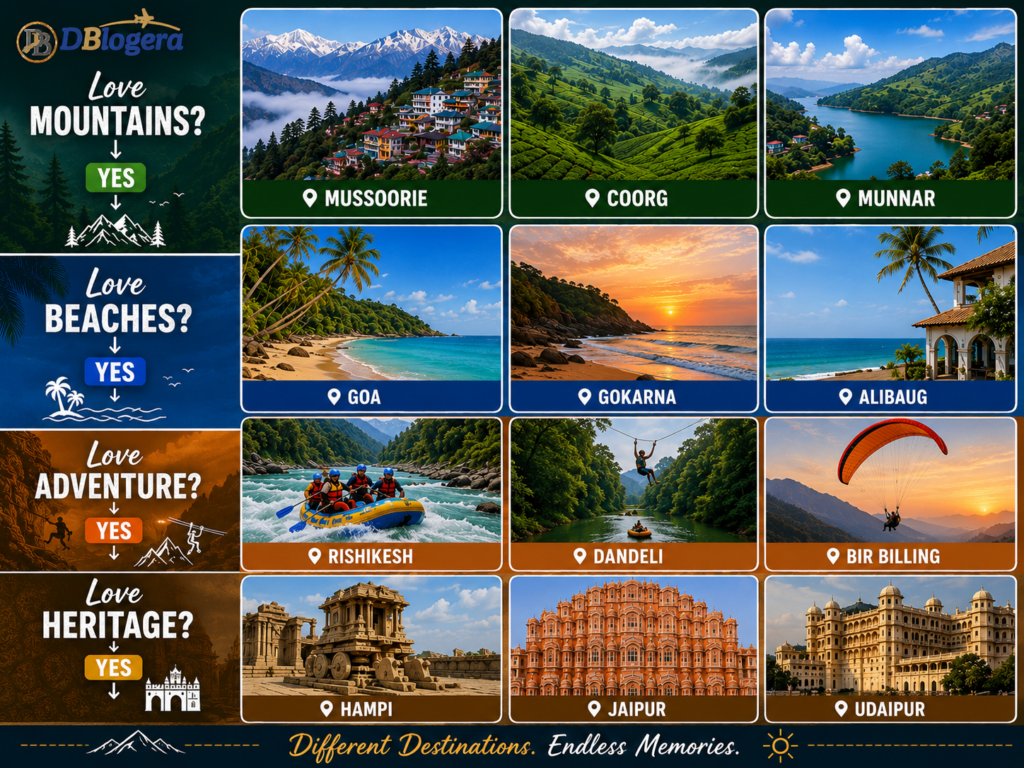
With so many long weekend travel ideas, selecting one can become confusing. Use the following framework to finalise your best-suited Independence Day Trip Destination.
For Couples
Choose Munnar, Coorg, Udaipur, Alleppey, Mahabaleshwar or Chikmagalur.
These places offer scenic accommodation, cafés, private experiences and romantic surroundings.
For Families
Consider Mount Abu, Saputara, Pachmarhi, Shillong, Orchha or Udaipur.
They offer a balanced combination of sightseeing, comfort, food and manageable activities.
For Friends
Lonavala, Dandeli, Chikmagalur, Coorg and Wayanad work well for group road trips and shared stays.
For History Lovers
Udaipur and Orchha are the strongest options from this list. Jaipur, Hampi and Mysuru can also be considered based on your starting city.
For Nature Lovers
Coorg, Munnar, Wayanad, Shillong, Chikmagalur and Pachmarhi offer the most immersive natural surroundings.
For Luxury Travellers
Consider a lake-view hotel in Udaipur, a premium plantation resort in Coorg, a luxury houseboat in Alleppey or a private villa near Lonavala.
For Budget Travellers
Orchha, Saputara, Mount Abu and destinations reachable by overnight bus or train are often more economical than trips involving flights.
Sample Three-Day Independence Day Itinerary
This flexible template can be used for most destinations.
Day 1: Arrival and Local Exploration
- Leave early in the morning or travel overnight.
- Check into your hotel.
- Eat a light local lunch.
- Visit two nearby attractions.
- Watch the sunset from a safe viewpoint.
- Enjoy dinner at a local restaurant.
Day 2: Main Sightseeing Day
- Start after checking the weather.
- Visit the destination’s most important attractions.
- Take a lunch break instead of rushing.
- Keep one indoor alternative ready.
- Return before dark in mountainous or forest areas.
- Spend the evening at a café, market or cultural venue.
Day 3: Slow Morning and Return
- Enjoy a relaxed breakfast.
- Visit one nearby attraction.
- Shop for local products.
- Check out on time.
- Begin the return journey early enough to avoid late-night driving.
Approximate Budget for a Three-Day Trip
The total amount will depend on your destination, starting city, transport and travel style.
| Travel Style | Approximate Total Cost |
| Solo backpacking | ₹4,000–₹8,000 |
| Budget trip for a couple | ₹10,000–₹18,000 |
| Comfortable couple trip | ₹18,000–₹30,000 |
| Mid-range family trip | ₹20,000–₹40,000 |
| Premium or luxury holiday | ₹40,000 and above |
Typical Cost Distribution
- Transport: 25–40%
- Accommodation: 25–35%
- Food: 10–20%
- Local sightseeing: 10–20%
- Activities and shopping: Variable
- Emergency reserve: At least 10%
These figures are broad planning estimates. Holiday demand, flight fares, premium properties and private taxis can increase the final cost.
How to Save Money on Independence Day Trips
Travelling during a holiday weekend does not have to be excessively expensive.
Book Early
Transport and hotel rates often increase closer to the holiday.
Travel Overnight
An overnight train or bus can reduce both travel time and one night’s accommodation cost.
Share Transportation
Groups can split the cost of a taxi, rental car or villa.
Stay Outside the Main Tourist Centre
Properties located a few kilometres outside the central market are often quieter and more affordable.
Choose Breakfast-Inclusive Hotels
A substantial breakfast can reduce food expenses and help you start sightseeing early.
Avoid Overbooking Activities
A three-day trip does not need expensive experiences every few hours. Scenic drives, local markets, public viewpoints, and heritage walks can be equally memorable.
Carry Snacks and Water
This is especially useful on road trips and in remote areas where choices may be limited.
What to Pack for an Independence Day Long Weekend
Packing light is helpful, but monsoon essentials should not be ignored.
Clothing
- Three lightweight outfits
- One warm layer for hill stations
- Quick-drying trousers
- Extra socks
- Comfortable nightwear
- Raincoat or poncho
- Cap or hat
Footwear
- Water-resistant shoes with good grip
- Lightweight sandals
- Avoid smooth-soled fashion footwear on wet trails
Health and Hygiene
- Prescription medicines
- Pain reliever and basic first-aid supplies
- Motion-sickness medicine
- Hand sanitiser
- Mosquito repellent
- Sunscreen
- Tissues
- Personal hygiene products
Electronics
- Phone charger
- Power bank
- Camera
- Waterproof phone pouch
- Multi-port charger
- Earphones
Documents
- Government-issued identity proof
- Hotel confirmations
- Transport tickets
- Driving licence
- Vehicle documents
- Emergency contact details
Essential Safety Tips for Monsoon Travel
A memorable trip should never come at the cost of personal safety.
- Avoid flooded or waterlogged roads.
- Never drive through flowing water when its depth is unknown.
- Follow district administration and local weather advisories.
- Do not trek during thunderstorms or intense rainfall.
- Avoid isolated trails without a registered guide.
- Stay away from the edge of waterfalls, dams and cliffs.
- Do not cross safety barricades for photographs or reels.
- Keep family members informed about your route.
- Carry cash in remote areas where digital networks may fail.
- Use only registered adventure operators.
- Avoid late-night driving on foggy mountain roads.
- Keep the vehicle fuelled before entering remote regions.
- Download offline maps.
- Carry a basic medical kit.
- Respect wildlife and never feed wild animals.
- Book refundable accommodation wherever possible.
Sustainable Travel Tips
The spirit of Independence Day can also inspire us to travel more responsibly and care for the country we celebrate.
Carry Reusable Items
Use a refillable water bottle, reusable cutlery and a cloth shopping bag.
Avoid Single-Use Plastic
Do not leave plastic bottles, snack packets or disposable raincoats at viewpoints and trekking sites.
Support Local Businesses
Eat at locally owned restaurants, purchase regional crafts and choose community-run experiences where possible.
Respect Wildlife
Maintain silence in forest areas, do not feed animals and never request guides to disturb wildlife for photographs.
Conserve Water and Energy
Reuse towels, switch off lights and avoid unnecessary water consumption at hotels.
Respect Local Culture
Dress appropriately at temples and heritage sites, ask permission before photographing people and follow local customs.
Leave No Trace
Carry your waste until you find a proper disposal facility. A destination should look as clean—or cleaner—after your visit.
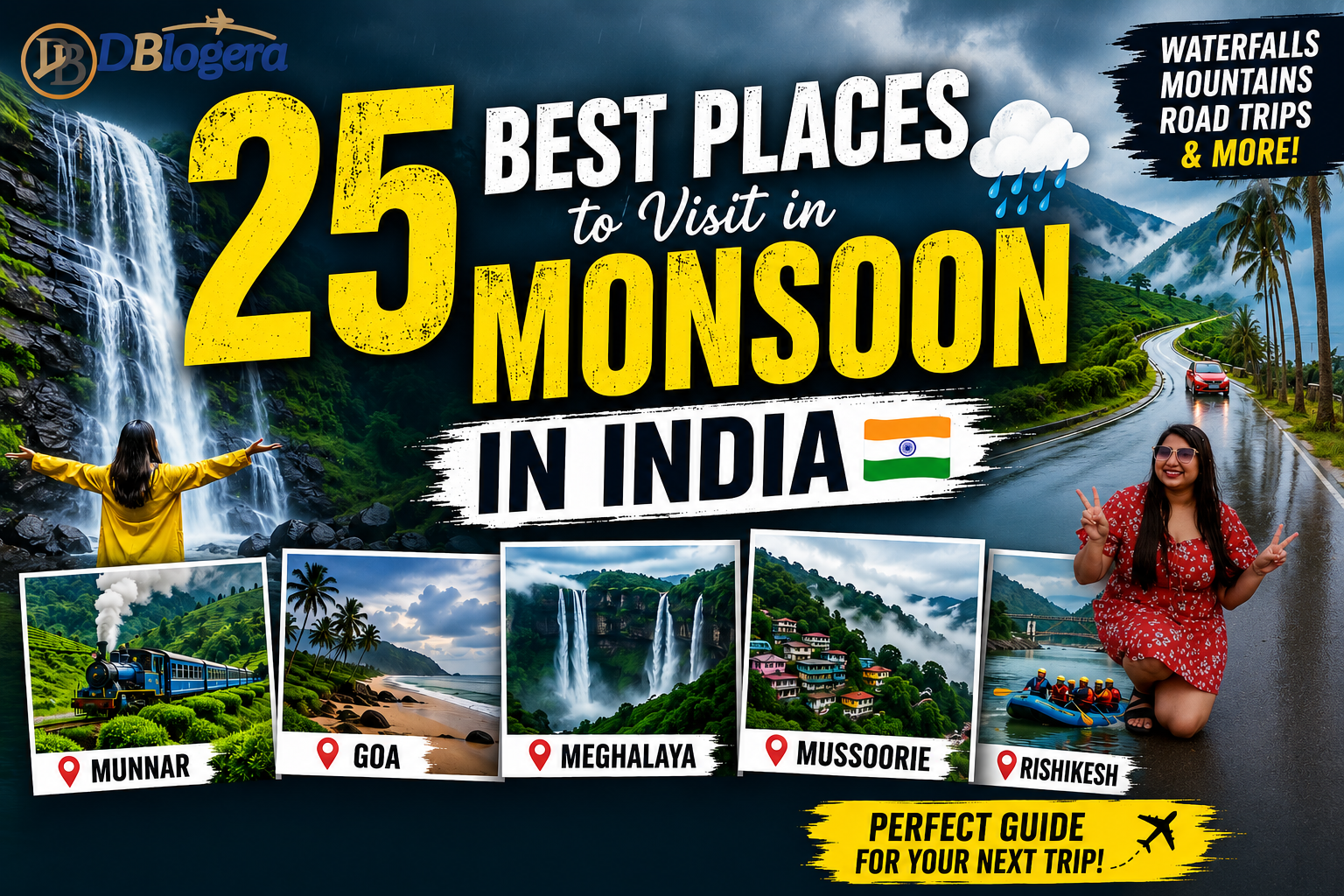
“Travellers searching for more rain-soaked escapes can explore our complete guide to the best places to visit in monsoon in India.”
Frequently Asked Questions
Which are the best Independence Day trip ideas in India?
Coorg, Munnar, Udaipur, Lonavala, Mahabaleshwar, Shillong, Wayanad, Chikmagalur, Alleppey, Mount Abu and Pachmarhi are excellent options. The right destination depends on your starting city, budget and current weather conditions.
Is August a good month to travel in India?
Yes, August is a rewarding month for monsoon travel. Hill stations, forests, waterfalls, lakes and plantation destinations look especially green. Travellers must remain flexible because heavy rainfall can affect roads and outdoor activities.
How can I plan a three-day Independence Day trip?
Choose a destination that can be reached without spending most of the holiday in transit. Book refundable transportation and accommodation, check the weather, pack rain protection and limit your itinerary to two or three major experiences per day.
Where should I travel for Independence Day from Delhi?
Popular options include Rishikesh, Mussoorie, Lansdowne, Jaipur, Agra and the Jim Corbett region. Select mountain destinations only after reviewing rainfall and road advisories.
Which Independence Day trips are best from Mumbai?
Lonavala, Khandala, Mahabaleshwar, Panchgani, Alibaug, Igatpuri, Matheran and Nashik are convenient long-weekend options from Mumbai.
Which destinations are best for couples?
Munnar, Coorg, Udaipur, Alleppey, Mahabaleshwar and Chikmagalur are among the best romantic getaways for couples.
Which destinations are suitable for families?
Udaipur, Mount Abu, Orchha, Saputara, Pachmarhi and Shillong offer family-friendly sightseeing and varied accommodation.
Which places are suitable for a road trip with friends?
Lonavala, Coorg, Chikmagalur, Wayanad, Dandeli and Mahabaleshwar work well for group road trips, depending on distance and road conditions.
Is the Valley of Flowers possible in three days?
For most travellers, no. The complete journey generally requires additional days because of road transfers, acclimatisation, trekking and possible weather delays. It should not be treated as a rushed three-day weekend trip from Delhi.
Is river rafting available in August?
Availability varies by destination, rainfall, river conditions and local permissions. Never book through an unregistered operator or enter a river when activities have been suspended.
How much does a three-day Independence Day trip cost?
A budget solo trip may cost ₹4,000–₹8,000. A couple may spend ₹10,000–₹30,000, while a family holiday can cost ₹20,000–₹40,000 or more. Flights, villas, private taxis and luxury resorts will increase the budget.
What should I pack for monsoon travel?
Carry a raincoat, waterproof backpack, shoes with grip, quick-drying clothing, medicines, identity proof, power bank, offline maps, cash and waterproof protection for electronics.
Should I book hotels in advance?
Yes. Independence Day is a popular holiday period, and good hotels, homestays and villas can sell out or become more expensive close to the date.
Are hill stations safe to visit in August?
Many hill stations remain open, but safety depends on real-time rainfall and road conditions. Check official weather and district advisories before departure and avoid travelling during warnings for landslides or extreme rain.
Final Thoughts
The Independence Day long weekend is more than a break from work. It is an opportunity to reconnect with friends and family, experience India’s natural beauty and appreciate the landscapes, cultures and communities that make the country so diverse.
You could sip fresh coffee while clouds move through the plantations of Coorg, admire rain-washed palaces beside Udaipur’s lakes, enjoy a quiet backwater cruise in Alleppey or watch mist settle across the hills of Chikmagalur.
The perfect destination does not have to be far away or expensive. For a three-day trip, convenience, safety and good planning are often more important than covering the maximum distance.
Choose a destination that suits your starting city. Reserve your transport and accommodation early. Monitor weather updates, keep the itinerary flexible and pack thoughtfully for the monsoon.
Most importantly, travel responsibly. Respect local communities, avoid littering and never compromise safety for a photograph or social media video.
So, apply for that single leave, gather your travel companions and turn the Independence Day weekend into a memorable celebration of freedom, exploration and discovery.
Happy Independence Day and happy travelling!