

Every year, as the monsoon clouds blanket northern India, millions of saffron-clad devotees set out on one of the world’s largest annual pilgrimages—the Kanwar Yatra. What begins as a physical journey from the sacred banks of the Ganga transforms into a deeply spiritual experience filled with faith, discipline, and devotion to Lord Shiva.
For many, Kanwar Yatra is more than just carrying holy water. It is a test of endurance, humility, patience, and unwavering belief. Roads come alive with chants of “Bol Bam!” and “Har Har Mahadev!”, while temporary camps, community kitchens, and volunteers create an atmosphere of unity unlike any other.
Whether you are planning your first Kanwar Yatra, traveling with family, documenting it as a photographer, or simply curious about its history and significance, this guide will help you understand every aspect of the pilgrimage.
In this comprehensive DBlogera Travel Guide, you’ll learn about the origins of Kanwar Yatra, its spiritual importance, different types of Kanwar, major pilgrimage routes, travel planning, monsoon safety tips, packing essentials, and the important dos and don’ts that every Kanwariya should follow.
What is Kanwar Yatra?
Kanwar Yatra is an annual Hindu pilgrimage undertaken by devotees of Lord Shiva, known as Kanwariyas. During the holy month of Shravan (Sawan), devotees collect sacred water from the River Ganga and carry it in a decorated bamboo structure called a Kanwar. They then walk—sometimes for hundreds of kilometers—to offer the holy water on a Shiva Lingam at their chosen temple.
The Kanwar itself symbolizes balance, devotion, and discipline. Traditionally, the sacred water is carried in two pots suspended on either side of a bamboo pole, and great care is taken to ensure that the Kanwar does not touch the ground before the offering is completed.
The pilgrimage is observed with strict spiritual discipline. Many devotees walk barefoot, follow a vegetarian diet, avoid intoxicants, maintain cleanliness, and spend their days chanting prayers dedicated to Lord Shiva.
Today, Kanwar Yatra is recognized as one of the largest annual religious gatherings in the world, attracting millions of pilgrims from states including Uttar Pradesh, Uttarakhand, Haryana, Delhi, Rajasthan, Punjab, Bihar, Jharkhand, Madhya Pradesh, and beyond.
Why is Kanwar Yatra Celebrated?
The spiritual significance of Kanwar Yatra is deeply connected with Lord Shiva and the sacred month of Shravan.
According to Hindu beliefs, offering Gangajal to Lord Shiva during Shravan is believed to:
- Seek Lord Shiva’s blessings
- Express gratitude and devotion
- Pray for health and prosperity
- Attain spiritual peace
- Fulfill personal wishes through sincere devotion
- Practice self-discipline and humility
For many devotees, completing the pilgrimage is considered an act of penance and spiritual purification rather than simply a physical journey.
The Mythological Story Behind Kanwar Yatra
The origins of Kanwar Yatra are rooted in Hindu mythology, with one of the most widely accepted legends linked to the Samudra Manthan (Churning of the Ocean).
During the cosmic churning, a deadly poison known as Halahala emerged from the ocean. To save the universe, Lord Shiva consumed the poison. Goddess Parvati held his throat to prevent the poison from spreading through his body, causing his throat to turn blue and earning him the name Neelkanth.
To reduce the intense heat caused by the poison, the gods are believed to have offered sacred Ganga water to Lord Shiva. This act of devotion is remembered by devotees today, who carry Gangajal during Shravan and offer it to Shiva Lingams across India.
Another popular legend associates Kanwar Yatra with Ravana, the devoted follower of Lord Shiva. It is believed that Ravana carried holy water to offer to Shiva, inspiring later generations of devotees to undertake similar pilgrimages.
These stories symbolize sacrifice, devotion, and the victory of faith over hardship.
Why Does Kanwar Yatra Take Place During Shravan?
Shravan, also known as Sawan, is one of the holiest months in the Hindu calendar and is especially dedicated to Lord Shiva.
This month coincides with the Indian monsoon, a season traditionally associated with renewal, fertility, and purification. The rains nourish the earth, while the pilgrimage is seen as a way to purify the soul.
Mondays during Shravan, known as Shravan Somvar, hold special significance. Many devotees plan their Kanwar Yatra so they can offer Gangajal to Lord Shiva on one of these auspicious Mondays.
This combination of favorable weather, religious importance, and ancient tradition has made Shravan the primary season for Kanwar Yatra.
Spiritual Significance of Gangajal
The River Ganga is revered as the holiest river in Hinduism. Its water, known as Gangajal, is considered sacred and is used in numerous religious ceremonies.
Offering Gangajal to Lord Shiva symbolizes:
- Purification of the mind and soul
- Surrender of ego
- Gratitude toward nature
- Spiritual discipline
- Dedication to Lord Shiva
For many devotees, the journey itself is considered as sacred as the final offering.
Who Can Participate in Kanwar Yatra?
One of the most remarkable aspects of Kanwar Yatra is its inclusivity.
People from all walks of life participate, including:
- Students
- Working professionals
- Farmers
- Business owners
- Families
- Senior citizens
- Women
- Young devotees undertaking their first pilgrimage
Some devotees travel individually, while others join organized groups, local communities, or religious organizations.
Although the pilgrimage is open to all, participants should ensure they are physically prepared, especially if planning to walk long distances.
Different Types of Kanwar Yatra
Not every Kanwariya follows the same style of pilgrimage. Over time, several forms of Kanwar Yatra have evolved, each reflecting different levels of devotion and physical commitment.
1. General Kanwar Yatra
This is the most common form of the pilgrimage.
Devotees collect Gangajal, travel at a comfortable pace, rest at camps along the way, and complete the pilgrimage over several days.
Ideal for:
- First-time pilgrims
- Families
- Senior citizens
2. Dak Kanwar
Dak Kanwar is one of the most demanding forms of the pilgrimage.
In this tradition, devotees complete the journey without stopping for extended rest. The Kanwar is continuously carried by members of a group, often taking turns to ensure that the pilgrimage continues uninterrupted.
This requires exceptional coordination, endurance, and discipline.
3. Khadi Kanwar
In Khadi Kanwar, the Kanwar is never placed on the ground.
Special stands are used whenever devotees need to rest or perform rituals.
This practice symbolizes unwavering dedication to Lord Shiva.
4. Dandi Kanwar
This is among the most physically challenging forms of the pilgrimage.
Devotees progress by repeatedly offering full-body prostrations, moving forward one body length at a time. Completing even a few kilometers in this manner requires extraordinary determination and devotion.
Why Millions Join Every Year
Kanwar Yatra is not driven by obligation but by personal faith.
For many devotees, it represents:
- Gratitude for answered prayers
- Seeking divine blessings
- Personal transformation
- Spiritual discipline
- Community service
- Inner peace
- A chance to disconnect from daily life and reconnect with faith
The atmosphere along the pilgrimage routes—filled with devotional songs, community kitchens (Bhandaras), volunteer services, and fellow pilgrims—creates a profound sense of unity and purpose.
Kanwar Yatra: A Unique Monsoon Travel Experience
From a travel perspective, Kanwar Yatra offers a rare opportunity to witness India’s spiritual heritage during the vibrant monsoon season.
The routes pass through scenic landscapes, lush greenery, rain-washed highways, sacred ghats, and historic temple towns. Along the way, travelers experience:
- Colorful saffron processions
- Decorated Kanwars
- Traditional devotional music
- Community kitchens serving free meals
- Medical assistance camps
- Volunteer-run resting shelters
- Cultural diversity united by devotion
For travel enthusiasts and photographers, the pilgrimage offers an authentic glimpse into one of India’s largest expressions of collective faith.
Major Kanwar Yatra Routes in India
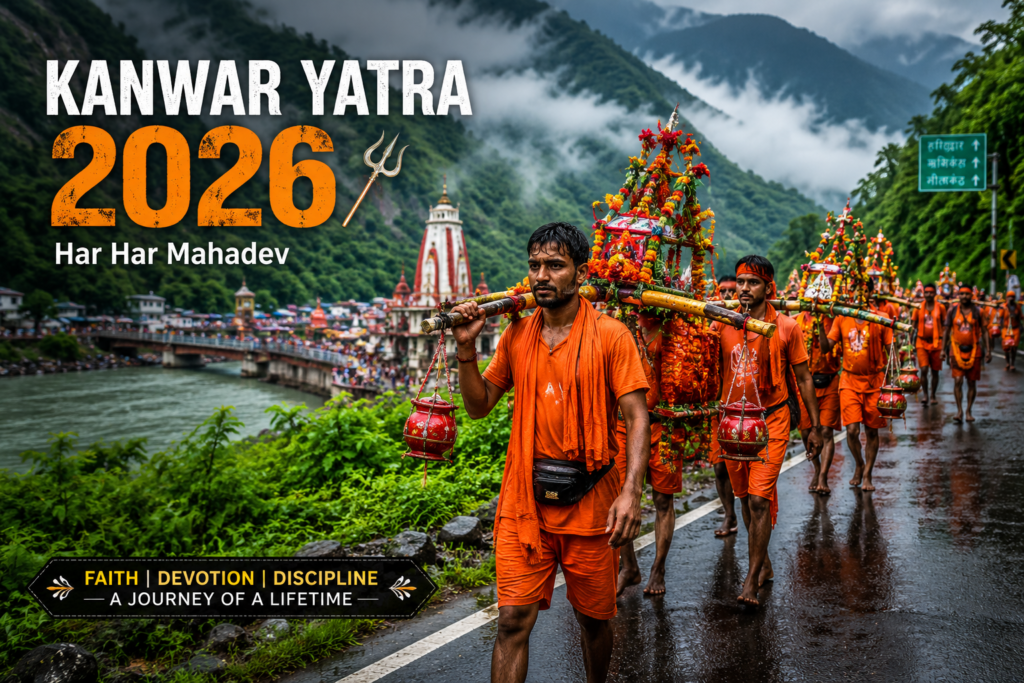
One of the reasons Kanwar Yatra is considered among the largest religious pilgrimages in the world is the vast network of routes that connect sacred rivers to famous Shiva temples across North and East India.
While every route has its own significance, all share one common purpose—to carry holy Gangajal and offer it to Lord Shiva with complete devotion.
1. Haridwar to Delhi, Western Uttar Pradesh & Haryana (Most Popular Route)
Distance
Approximately 150–300 km, depending on the destination temple.
Haridwar is undoubtedly the most popular starting point for Kanwar Yatra. Every year, millions of devotees arrive here to collect Gangajal from the sacred Har Ki Pauri Ghat before beginning their journey on foot.
This route witnesses the highest number of pilgrims and is well-supported with:
- Medical camps
- Free food (Bhandaras)
- Drinking water stations
- Police assistance
- Rest camps
- Volunteer organizations
Common Destinations
- Meerut
- Muzaffarnagar
- Ghaziabad
- Noida
- Delhi
- Sonipat
- Panipat
- Rohtak
This route is ideal for first-time Kanwariyas due to its excellent infrastructure and community support.
2. Gaumukh–Gangotri Route (The Purest Source)
For devotees seeking the most spiritually significant experience, Gangotri holds immense importance as one of the sacred origins of the River Ganga.
Many pilgrims begin their journey here before traveling to various Shiva temples across North India.
Why Choose Gangotri?
- Sacred Himalayan atmosphere
- Less crowded than Haridwar
- Beautiful mountain scenery
- Spiritual serenity
- Glacier-fed Gangajal
This route is physically demanding and is recommended only for experienced travelers.
3. Rishikesh Kanwar Route
Located just 25 km from Haridwar, Rishikesh is another important destination where devotees collect holy water before continuing toward their hometowns or Shiva temples.
Besides its religious significance, Rishikesh offers:
- Peaceful ghats
- Ancient temples
- Yoga centres
- Scenic Himalayan views
- Spiritual ambience
Many pilgrims prefer Rishikesh because it is relatively less crowded than Haridwar.
4. Sultanganj to Baba Baidyanath Dham (Jharkhand)
This is one of eastern India’s most famous Kanwar routes.
Pilgrims collect Gangajal from the Ganga at Sultanganj in Bihar and walk approximately 105 km to Baba Baidyanath Temple in Deoghar.
Unlike Haridwar, the Ganga flows northward at Sultanganj, making the water especially sacred according to Hindu beliefs.
Highlights include:
- Continuous chanting of “Bol Bam”
- Vibrant devotional atmosphere
- Thousands of volunteer camps
- Rich cultural traditions of Bihar and Jharkhand
5. Local Kanwar Routes
Many devotees do not undertake long-distance pilgrimages. Instead, they collect Gangajal from nearby sacred rivers and visit local Shiva temples within their district or city.
These shorter routes are ideal for:
- Elderly devotees
- Families
- Children
- First-time participants
- Those with limited time
Most Important Shiva Temples for Kanwar Offering

Every Kanwariya has a personal destination, but some temples attract millions of devotees each year.
Haridwar
Although Haridwar is primarily the collection point for Gangajal, many devotees also visit its ancient Shiva temples before beginning their journey.
Must-visit places include:
- Har Ki Pauri
- Bilkeshwar Mahadev Temple
- Daksh Mahadev Temple
Neelkanth Mahadev Temple (Uttarakhand)
Located amid lush forests near Rishikesh, Neelkanth Mahadev is believed to be the place where Lord Shiva consumed the Halahala poison during Samudra Manthan.
The temple becomes especially vibrant during Shravan and offers breathtaking monsoon views.
Kashi Vishwanath (Varanasi)
One of the twelve Jyotirlingas, Kashi Vishwanath is among the holiest Shiva temples in India.
Many devotees travel long distances to offer Gangajal here during Shravan.
Baba Baidyanath Dham (Deoghar)
Another revered Jyotirlinga, Baba Baidyanath Temple receives millions of Kanwariyas every year, especially those following the Sultanganj route.
Pura Mahadev Temple (Baghpat, Uttar Pradesh)
This ancient temple is extremely popular among devotees from Western Uttar Pradesh.
Many Kanwariyas from Haridwar complete their pilgrimage here.
Augarnath Temple (Meerut)
One of the oldest Shiva temples in Meerut, Augarnath Temple attracts thousands of Kanwariyas every Shravan.
Its historical significance and accessibility make it a preferred destination for devotees from the region.
Best Time to Start Kanwar Yatra
The pilgrimage takes place during the Hindu month of Shravan, usually falling between July and August.
For a smoother experience:
- Begin early in the morning.
- Avoid peak weekend crowds if possible.
- Keep track of local advisories and route diversions.
- Plan your offering on an auspicious Shravan Monday if desired.
Weather During Kanwar Yatra
Since Kanwar Yatra coincides with the monsoon, weather conditions can change rapidly.
Average Conditions
| Factor | Expected |
| Temperature | 24–34°C |
| Rainfall | Moderate to Heavy |
| Humidity | High |
| Walking Conditions | Wet Roads |
| Visibility | Variable |
Always prepare for rain, slippery roads, and occasional waterlogging.
Suggested Itinerary for First-Time Kanwariyas
Day 1
- Reach Haridwar.
- Visit Har Ki Pauri.
- Attend the evening Ganga Aarti.
- Rest for the night.
Day 2
- Wake up before sunrise.
- Take a holy dip (if health and local conditions permit).
- Collect Gangajal.
- Begin the Kanwar Yatra.
Day 3–5
- Walk according to your physical capacity.
- Rest at designated camps.
- Stay hydrated.
- Participate in devotional singing and community service if possible.
Final Day
- Reach your chosen Shiva temple.
- Offer Gangajal.
- Perform prayers (Jalabhishek).
- Complete the pilgrimage with gratitude and discipline.
Transportation Guide
Although the Kanwar Yatra itself is traditionally undertaken on foot, devotees often use public or private transport to reach the starting point.
By Air
Nearest airports:
- Dehradun (Jolly Grant Airport)
- Varanasi
- Patna
By Train
Major railway stations:
- Haridwar Junction
- Rishikesh
- Dehradun
- Varanasi
- Jasidih Junction (for Deoghar)
Book tickets well in advance, as demand increases significantly during Shravan.
By Road
Haridwar is well connected via:
- Delhi
- Meerut
- Chandigarh
- Lucknow
- Jaipur
- Dehradun
During Kanwar Yatra, authorities often implement traffic diversions. Check local advisories before traveling.
Accommodation Options
Accommodation ranges from budget-friendly to comfortable hotels.
Budget
- Dharamshalas
- Ashrams
- Community halls
- Temporary camps
Approximate Cost: ₹300–₹800 per night
Mid-Range Hotels
Ideal for families and pilgrims seeking additional comfort.
Approximate Cost: ₹1,000–₹3,000 per night
Premium Hotels
Available in Haridwar, Rishikesh, and Dehradun.
Approximate Cost: ₹3,000–₹8,000+ per night
Food During Kanwar Yatra
One of the most heartwarming aspects of Kanwar Yatra is the tradition of Bhandaras—community kitchens offering free vegetarian meals to pilgrims.
Common meals include:
- Khichdi
- Poori-Sabzi
- Rice
- Dal
- Seasonal fruits
- Tea
- Milk
- Lemon water
Many volunteers serve food around the clock as an act of devotion.
Responsible Monsoon Travel Tips
As Kanwar Yatra takes place during the rainy season, responsible travel is essential for your safety and for preserving the environment.
Travel Responsibly
- Avoid littering on pilgrimage routes.
- Carry reusable water bottles where possible.
- Dispose of waste only in designated bins.
- Respect local customs and fellow pilgrims.
- Follow instructions from volunteers and authorities.
- Avoid disturbing wildlife or damaging natural surroundings.
A clean pilgrimage reflects respect for both nature and faith.
Photography Etiquette During Kanwar Yatra
Kanwar Yatra offers vibrant visual experiences, but photography should always be respectful.
Do
- Ask permission before taking close-up portraits.
- Capture the atmosphere without obstructing pilgrims.
- Respect sacred rituals and prayer moments.
Don’t
- Use drones in restricted areas.
- Block pathways for photographs.
- Take intrusive pictures during worship.
- Use flash photography inside temples where prohibited.
Remember, you’re documenting a sacred journey—not just a tourist event.
Why DBlogera Recommends Haridwar for First-Time Pilgrims
For beginners, Haridwar remains the best starting point because it combines spiritual significance with practical convenience.
Essential Dos for Every Kanwariya
The spirit of Kanwar Yatra is rooted in discipline, humility, and respect. Following these practices helps maintain the sanctity of the pilgrimage while ensuring your own safety and that of fellow devotees.
1. Begin the Journey with a Pure Mind
Kanwar Yatra is not just about walking long distances; it is about inner transformation. Start your journey with sincerity, patience, and devotion to Lord Shiva.
2. Follow the Route Designated by Authorities
During the yatra, dedicated Kanwar lanes and traffic arrangements are created for pilgrims. Stay on the designated route and follow the instructions of police, volunteers, and local administration.
3. Stay Hydrated
Walking for several hours in humid monsoon weather can lead to dehydration.
Drink water regularly and consume oral rehydration solutions (ORS) or electrolyte drinks when needed.
Recommended intake:
- 3–5 litres of water daily (adjust based on weather and activity level)
- Fresh fruits such as bananas, oranges, and apples
- Coconut water where available
4. Wear Comfortable Clothing
Choose lightweight, breathable clothing suitable for walking in humid conditions.
Ideal choices include:
- Cotton T-shirts
- Quick-dry track pants
- Comfortable sandals or walking shoes (if your chosen tradition permits footwear)
- Lightweight raincoat or poncho
Avoid heavy clothing that becomes uncomfortable when wet.
5. Respect Fellow Pilgrims
Remember that people of different ages and backgrounds are undertaking the pilgrimage.
Be patient in queues, offer help when needed, and maintain a peaceful attitude throughout the journey.
6. Keep the Kanwar Sacred
Traditionally, the Kanwar should not be placed directly on the ground. Use specially designed Kanwar stands whenever you need to rest or perform rituals.
Handle the Kanwar with care and respect throughout the pilgrimage.
7. Follow Temple Rules
Every temple has its own guidelines regarding:
- Queue management
- Mobile phone usage
- Photography
- Offerings
- Entry procedures
Cooperate with temple authorities to ensure a smooth experience for everyone.
8. Carry Valid Identification
Always keep a government-issued photo ID, emergency contact details, and any essential medical information with you.
Important Don’ts During Kanwar Yatra
Avoiding common mistakes is just as important as following the right practices.
Don’t Consume Alcohol or Tobacco
Kanwar Yatra is a sacred pilgrimage. Devotees are expected to abstain from alcohol, tobacco, and intoxicating substances during the journey.
Don’t Litter
Plastic bottles, food wrappers, and disposable plates should always be discarded in designated waste bins.
Help preserve the cleanliness of the pilgrimage routes and sacred places.
Don’t Play Loud Music Inappropriately
Devotional songs and bhajans are an integral part of the yatra. However, avoid loud or inappropriate music that disturbs other pilgrims or local residents.
Don’t Ignore Physical Fatigue
If you experience dizziness, severe pain, dehydration, or exhaustion, stop and seek medical assistance immediately.
Never ignore warning signs from your body.
Don’t Rush
Kanwar Yatra is not a race. Walk at a comfortable pace and avoid unnecessary competition with other groups.
Don’t Damage Public Property
Respect roads, parks, public buildings, and private property. Responsible conduct reflects the true spirit of devotion.
Don’t Ignore Weather Alerts
Heavy rainfall can lead to slippery roads, waterlogging, and temporary route changes.
Always follow official advisories and avoid unsafe shortcuts.
Complete Kanwar Yatra Packing Checklist
Packing wisely can significantly improve your comfort and safety during the pilgrimage.
Essential Documents
- Aadhaar Card or valid ID
- Emergency contact list
- Medical prescriptions
- Health insurance details (if applicable)
- Cash and digital payment options
Clothing
- Cotton T-shirts (3–4)
- Lightweight track pants
- Comfortable innerwear
- Extra socks
- Lightweight towel
- Raincoat or poncho
- Cap or head covering
Footwear
Depending on your chosen tradition:
- Comfortable walking shoes
- Sandals
- Slippers for resting
- Waterproof footwear (optional)
Medical Kit
Carry a small first-aid kit containing:
- Band-aids
- Antiseptic cream
- Pain relief spray
- ORS sachets
- Cotton and gauze
- Personal medications
- Mosquito repellent
- Hand sanitizer
Food Items
Keep lightweight, energy-rich snacks with you.
Recommended options:
- Dry fruits
- Energy bars
- Jaggery
- Roasted chana
- Dates
- Glucose biscuits
- Bananas
Electronics
- Mobile phone
- Power bank (minimum 10,000 mAh)
- Charging cable
- Torch or headlamp
- Waterproof mobile pouch
Miscellaneous Items
- Reusable water bottle
- Umbrella
- Plastic zip-lock bags
- Small backpack
- Wet wipes
- Hand towel
- Prayer beads (if used)
Health Tips for Kanwar Yatra
Walking long distances requires stamina and preparation.
Before the Journey
Start preparing at least 3–4 weeks in advance.
Include:
- Daily walking (3–5 km initially, gradually increasing)
- Light stretching
- Hydration
- Balanced meals
- Adequate sleep
If you have a pre-existing medical condition, consult your doctor before participating.
During the Journey
- Stretch before and after walking.
- Rest whenever needed.
- Eat light but nutritious meals.
- Avoid skipping meals.
- Drink water at regular intervals.
- Protect yourself from prolonged exposure to rain.
Common Health Challenges
Pilgrims may experience:
- Blisters
- Muscle cramps
- Dehydration
- Foot pain
- Heat exhaustion (during sunny intervals)
- Cold and cough due to rain
Most can be managed with proper rest, hydration, and timely medical attention.
Monsoon Safety Tips
The Shravan season coincides with India’s monsoon, making weather preparedness essential.
Stay Safe During Rain
- Wear anti-slip footwear if permitted.
- Avoid flooded roads and drains.
- Keep valuables in waterproof bags.
- Stay away from damaged electrical poles and exposed wires.
- Follow weather advisories issued by local authorities.
Safety Tips for Families
Families traveling with children or elderly members should take extra precautions.
Children
- Keep identification cards with emergency contacts.
- Ensure they stay close to the group.
- Carry sufficient snacks and water.
Senior Citizens
- Walk shorter distances.
- Take frequent breaks.
- Carry prescribed medicines.
- Avoid overexertion.
Women Pilgrims
An increasing number of women participate in Kanwar Yatra each year.
Helpful suggestions:
- Travel with trusted companions or groups.
- Share your itinerary with family.
- Keep emergency numbers readily accessible.
- Choose well-lit and organized accommodation.
Budget Guide for Kanwar Yatra
One of the unique aspects of Kanwar Yatra is that it can be completed on almost any budget due to the widespread availability of free services.
| Expense | Approximate Cost (INR) |
| Travel to Haridwar | ₹500–₹3,000 |
| Accommodation | ₹0–₹2,500/night |
| Food | Mostly free at Bhandaras |
| Medical Kit | ₹300–₹800 |
| Rain Gear | ₹300–₹700 |
| Miscellaneous | ₹500–₹1,500 |
Estimated Total Budget
Budget Pilgrimage: ₹1,500–₹4,000
Comfortable Pilgrimage: ₹5,000–₹10,000
Responsible Tourism During Kanwar Yatra
As one of the world’s largest annual pilgrimages, Kanwar Yatra has a significant environmental impact. Every pilgrim can contribute to making it cleaner and more sustainable.
Reduce Plastic Waste
Instead of buying disposable plastic bottles repeatedly, carry a reusable water bottle and refill it at safe drinking water stations whenever possible.
Respect Nature
The pilgrimage passes through forests, rivers, and ecologically sensitive areas.
Avoid:
- Throwing waste into rivers.
- Damaging plants.
- Polluting natural water sources.
Support Local Communities
Purchase essentials from local vendors and respect the traditions of the towns and villages you pass through. Responsible spending supports local livelihoods.
Emergency Preparedness
Always save these important contacts before beginning your journey:
- State Emergency Helpline: 112
- Ambulance: 108 (available in many states)
- Police Assistance: 100 (where operational)
- Local administration and Kanwar control room numbers (check district advisories before departure)
Also:
- Inform a family member of your route and expected arrival.
- Keep your phone charged.
- Carry a written copy of emergency contacts in case your phone battery runs out.
Common Mistakes First-Time Kanwariyas Should Avoid
Many challenges faced during the pilgrimage are preventable. Avoid these common mistakes:
- Starting the journey without physical preparation.
- Wearing new or uncomfortable footwear.
- Carrying excessive luggage.
- Depending solely on mobile navigation without understanding the route.
- Ignoring hydration and nutrition.
- Walking continuously without rest.
- Disregarding weather warnings.
- Not carrying basic medicines or first-aid supplies.
- Taking selfies or videos in unsafe locations.
- Forgetting that the pilgrimage is an act of devotion, not a competition.
A Pilgrimage of Service
Kanwar Yatra is also a celebration of Seva (selfless service). Along the routes, countless volunteers organize:
- Free food distribution (Bhandaras)
- Drinking water stations
- Medical camps
- Rest shelters
- Blood donation drives
- Cleanliness campaigns
For many devotees, participating in these acts of service is as spiritually meaningful as carrying the Kanwar itself.
Congratulations! If you’ve reached this section, you now have a comprehensive understanding of Kanwar Yatra 2026—its history, spiritual significance, major routes, travel planning, safety measures, and responsible pilgrimage practices.
In this final section, we’ll answer the most frequently asked questions, debunk common myths, share fascinating facts, provide final travel tips, and optimize your blog for better search engine visibility.
Frequently Asked Questions (FAQs)
1. What is Kanwar Yatra?
Kanwar Yatra is an annual Hindu pilgrimage during the holy month of Shravan (Sawan) in which devotees of Lord Shiva, known as Kanwariyas, collect sacred Gangajal from rivers such as the Ganga and carry it to Shiva temples to perform Jalabhishek (ritual offering of water).
2. Why is Gangajal offered to Lord Shiva?
According to Hindu tradition, Lord Shiva consumed the deadly Halahala poison during the Samudra Manthan to protect the universe. Offering Gangajal symbolizes devotion, gratitude, and the cooling of the divine energy associated with this act.
3. When is Kanwar Yatra held?
Kanwar Yatra takes place every year during the Hindu month of Shravan, generally falling between July and August, depending on the lunar calendar.
4. Who can participate in Kanwar Yatra?
The pilgrimage is open to all devotees, regardless of age or profession. However, participants should be physically prepared for long-distance walking and follow local guidelines and traditions.
5. Can women participate in Kanwar Yatra?
Yes. Women actively participate in Kanwar Yatra across many parts of India. Many travel individually, with families, or in organized groups while observing the customs and discipline of the pilgrimage.
6. Is registration required?
Registration requirements vary depending on the state and local administration. Before beginning your journey, always check the latest government advisories for your intended route.
7. What is the best starting point for first-time pilgrims?
Haridwar is widely regarded as the most convenient starting point due to its spiritual importance, strong transport connectivity, and extensive facilities for pilgrims.
8. How many days does Kanwar Yatra take?
The duration depends on the chosen route and destination. Some local pilgrimages can be completed in a day, while long-distance journeys may take several days.
9. Is Kanwar Yatra safe?
Yes, provided pilgrims follow official advisories, use designated routes, stay hydrated, and cooperate with local authorities. Large-scale arrangements for medical aid, security, and traffic management are typically made during the yatra.
10. What should first-time Kanwariyas remember?
The most important principles are:
- Walk according to your physical capacity.
- Respect fellow devotees.
- Follow temple customs.
- Carry only essential items.
- Keep the pilgrimage focused on devotion and discipline.
Interesting Facts About Kanwar Yatra
Many people know Kanwar Yatra as a religious event, but few realize the scale and significance of this extraordinary pilgrimage.
1. One of the World’s Largest Annual Pilgrimages
Every Shravan, millions of devotees participate across northern and eastern India, making it one of the largest recurring religious gatherings globally.
2. The Entire Journey is Based on Faith
Unlike many organized tours, Kanwar Yatra relies heavily on community support. Thousands of volunteers provide food, water, medical assistance, and resting places free of cost.
3. The Pilgrimage Strengthens Community Bonds
People from diverse regions, languages, and backgrounds come together with a shared purpose, creating a unique atmosphere of unity and service.
4. Monsoon Makes the Journey Special
The lush landscapes, rain-washed roads, and cooler temperatures of the monsoon season add a distinctive charm to the pilgrimage, making it both spiritually and visually memorable.
5. Service (Seva) is Central to the Experience
Many individuals who do not undertake the pilgrimage still participate by organizing Bhandaras, medical camps, drinking water stations, and volunteer services for Kanwariyas.
Myth vs. Fact
| Myth | Fact |
| Only experienced devotees can participate. | Many first-time pilgrims complete the yatra successfully with proper preparation. |
| Kanwar Yatra is only about walking. | It is primarily a spiritual discipline involving devotion, patience, and self-control. |
| Every pilgrim must walk hundreds of kilometers. | Many devotees undertake shorter local routes based on their ability and tradition. |
| Expensive gear is necessary. | Comfortable clothing, basic essentials, and proper planning are more important than costly equipment. |
| The pilgrimage is only for men. | Women also participate in large numbers across many regions. |
Final Travel Tips
Before you begin your Kanwar Yatra, keep these practical suggestions in mind:
- Prepare physically by walking regularly before the pilgrimage.
- Pack light and carry only essentials.
- Stay hydrated and eat nutritious meals.
- Respect local customs and traditions.
- Keep emergency contacts accessible.
- Use official pilgrimage routes.
- Avoid unnecessary risks during heavy rainfall.
- Offer assistance to fellow pilgrims whenever possible.
- Leave the places you visit cleaner than you found them.
- Remember that devotion is reflected in your conduct as much as in the ritual itself.
Why Kanwar Yatra is More Than Just a Journey
Kanwar Yatra is often described as a walk of faith, but it is also a journey of personal transformation.
The pilgrimage teaches:
- Patience through long walks.
- Discipline through daily routines.
- Humility through service.
- Gratitude through prayer.
- Unity through shared devotion.
For many devotees, reaching the temple is not the end of the pilgrimage—it is the beginning of a deeper spiritual connection.
Conclusion
Every monsoon, as saffron-clad devotees walk along highways, village roads, and riverbanks carrying sacred Gangajal, they become part of a tradition that has inspired generations through faith, perseverance, and community spirit.
Whether you are a first-time Kanwariya, a seasoned pilgrim, a photographer, or a traveler seeking to understand India’s living spiritual heritage, Kanwar Yatra offers an unforgettable experience that goes beyond tourism. It is a celebration of devotion, discipline, service, and resilience.
If you choose to undertake the pilgrimage, prepare thoughtfully, travel responsibly, respect local customs, and prioritize your health and safety. Most importantly, remember that the true essence of Kanwar Yatra lies not in the distance covered but in the sincerity of your devotion.
Har Har Mahadev!